

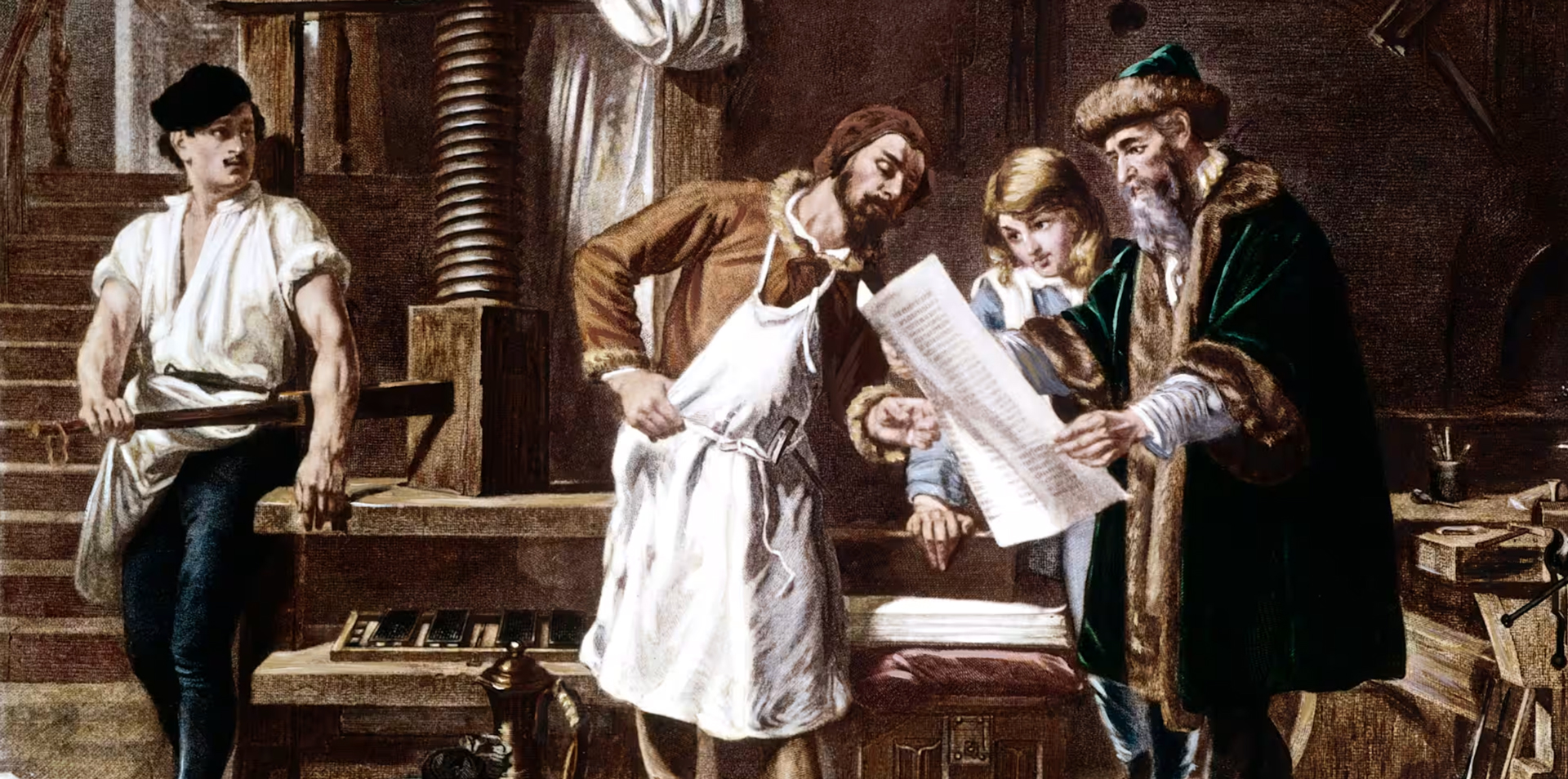

Header Image: Johannes Gutenberg and the Gutenberg Printing Press – 1436. Developed in the 15th century by Johannes Gutenberg, the Gutenberg Printing Press was a revolutionary mechanical system that combined movable metal type with an oil-based ink. By enabling the rapid, mass production of texts, it permanently transformed global communication, education, and public literacy.
Graphic Design Evolution
Graphic design didn’t start on a screen. It began with ink, paper, and mechanical precision. Yet today, it thrives in pixels, motion, and interactivity. So how did we get here?
The evolution of graphic design tells a story of constant reinvention.
Graphic Design Is Ubiquitous
Early design focused heavily on print. Typography played a central role, as designers worked within strict limitations. Every letter, space, and alignment mattered because changes required time and effort. With this time and effort came the development of fundamental design principles that we utilize to this day…or at least we should.
However, things began to shift as technology advanced. Designers gained more flexibility, which opened the door to experimentation. Movements emerged, each bringing new ideas about structure, form, and communication.
As design entered the digital era, everything accelerated. Suddenly, designers could test ideas instantly, adjust layouts quickly, and reach global audiences effortlessly. This shift didn’t just change tools—it changed thinking.
Now, design focuses more on user experience. It’s no longer just about how something looks…though it never should have been. Instead, it’s about how it works, how it feels, what emotions are evoked, what people take from it, and how it engages people.
Moreover, digital platforms introduced motion and interaction. Static designs transformed into dynamic experiences. Websites, apps, and social media content now demand constant adaptation.
Key Lessons
Technology drives design forward. When tools evolve, design evolves with them. At the same time, core principles remain important. Balance, hierarchy, and clarity still guide effective design. Finally, adaptability defines great designers. Those who embrace change stay relevant.
Examples
Think about websites. Early designs were simple and text-heavy. Today, they include animations, responsive layouts, and personalized content. Or consider branding. Brand marks once designed for print only now must work across screens, apps, VR, and even motion graphics.
Conclusion
The evolution of graphic design shows one clear truth: change is constant. Designers who understand both history and innovation create the strongest work.
What Now?
How do you see design evolving in the next five years? Are you adapting your skills to keep up with digital trends?
